But the real story isn't in the material specs. It's in what FRP tanks actually deliver day-to-day, which industries depend on them most, and what goes wrong when their maintenance is neglected. This article covers all three.
Key Takeaways
- FRP tanks combine glass fiber reinforcement with polymer resin to create corrosion-resistant vessels suited for aggressive industrial chemicals
- Their high strength-to-weight ratio reduces installation complexity and civil work requirements compared to steel or concrete
- Lower maintenance frequency, no cathodic protection, and no exterior coating requirements drive down lifecycle costs compared to steel tanks
- Primary users include chemical plants, water and wastewater treatment facilities, food processing operations, and industrial manufacturers
- Choosing the right resin system and scheduling regular interior lining inspections are the two highest-impact steps for maximizing tank service life
What Is an FRP Chemical Storage Tank?
FRP stands for Fiberglass-Reinforced Plastic, a composite material combining glass fiber reinforcement with a polymer resin. The resin system can be polyester (isophthalic or terephthalic), vinylester, or epoxy, depending on the application.
This construction creates a vessel that is structurally rigid yet chemically inert at its interior surface — making it suitable for aggressive chemicals that would corrode metal or degrade unlined concrete.
FRP tanks are not commodity products. They are engineered systems where resin selection is the most critical design decision.
Why Resin Selection Matters
The same basic fiberglass construction doesn't perform equally across all chemicals:
- Isophthalic polyester — suitable for moderate chemical service; most cost-effective entry point for lower-temperature applications
- Terephthalic polyester — improved chemical resistance over standard isophthalic grades, with better hydrolytic stability
- Vinylester — broader resistance profile, preferred for oxidizing acids and sodium hypochlorite service up to higher concentrations
- Epoxy — selected for specific chemistries where vinylester falls short, particularly high-concentration caustic environments like sodium hydroxide
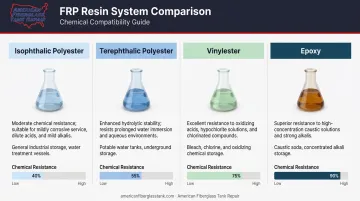
The resin system determines which chemicals the tank can safely hold, at what temperatures, and for how long. Mismatching the resin to the stored chemical is the fastest path to premature liner failure.
Key Benefits of FRP Chemical Storage Tanks
The advantages below focus on measurable, operational outcomes — not just material properties.
Corrosion and Chemical Resistance
FRP tanks don't rust, oxidize, or react with the majority of industrial chemicals. The glass fiber structure is chemically inert, and the interior resin liner is engineered specifically for chemical compatibility with the stored substance.
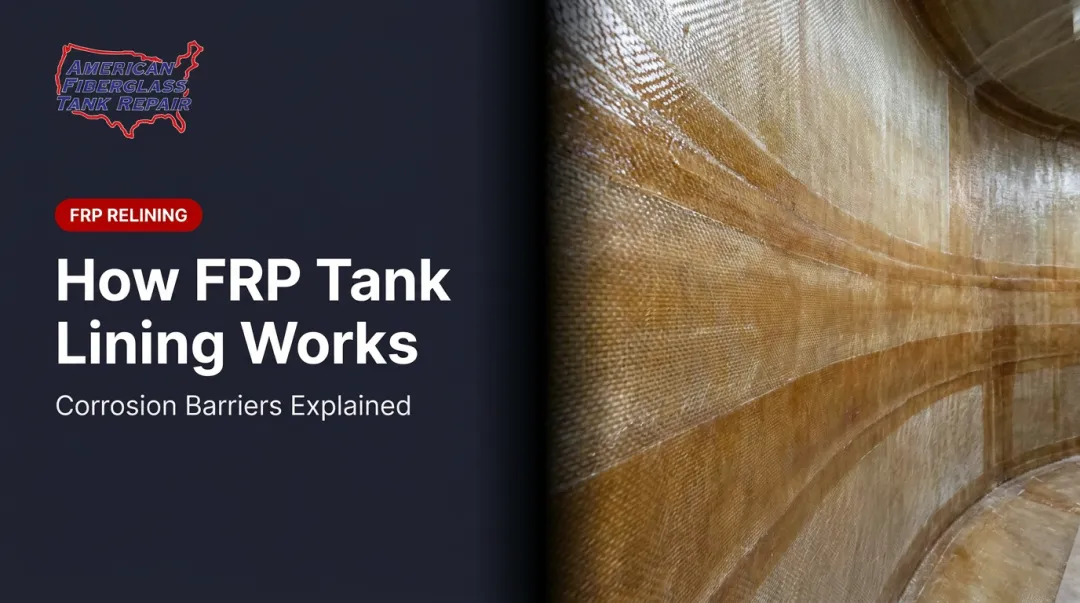
How this works in practice: the interior corrosion liner — the innermost resin-rich layer — acts as the primary chemical barrier. The structural laminate behind it provides mechanical strength. When the liner is intact, the stored chemical never contacts a surface it can degrade.
The cost consequences of corrosion failures are substantial. A landmark NACE International and FHWA study estimated that hazardous material storage corrosion costs U.S. industry $7 billion per year, with drinking water and sewer systems adding another $36 billion annually.
Where corrosion resistance matters most:
- Oxidizing acids — sulfuric, hydrochloric, hydrofluosilicic
- Sodium hypochlorite and ferric chloride in water treatment service
- Sodium hydroxide and potassium hydroxide in caustic applications
- Outdoor installations exposed to UV and temperature cycling
- Facilities subject to CERCLA secondary containment obligations — sodium hypochlorite, ferric chloride, and sodium hydroxide all have reportable quantity thresholds under 40 CFR 302.4
High Strength-to-Weight Ratio
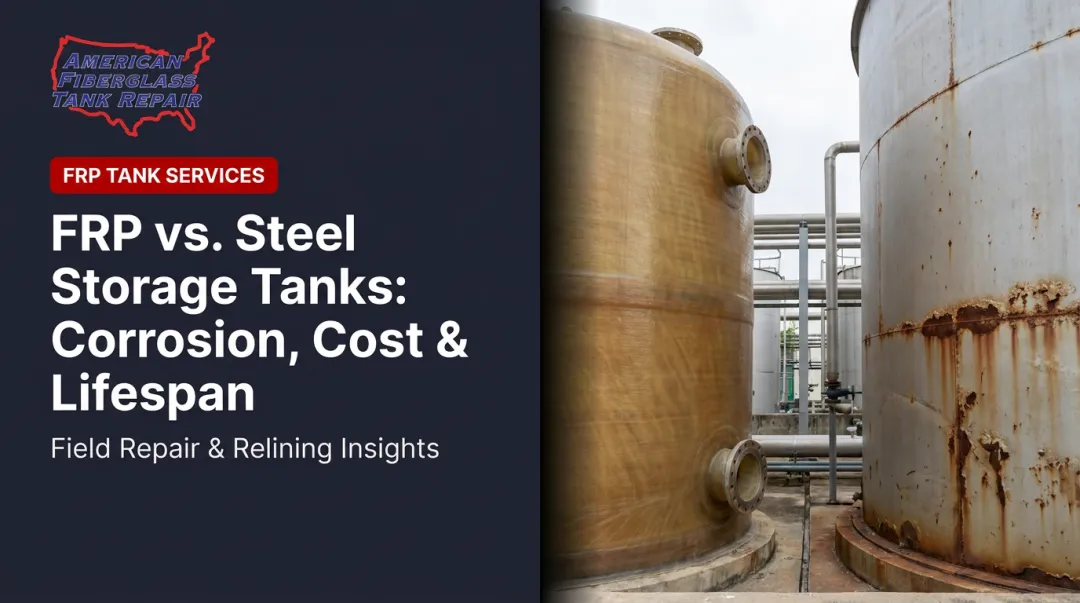
FRP is much lighter than carbon steel — steel plate (ASTM A36) has a density of roughly 7.80 g/cc, while glass-fiber-reinforced polyester composites run closer to 1.85 g/cc. That density difference translates directly into installation and logistics advantages.
In operational terms, lighter tanks mean:
- Less foundation reinforcement required
- Easier transport to remote or space-constrained sites
- Field assembly of large-diameter tanks using lighter equipment
- Reduced civil work costs at facilities with limited crane access
This matters most when upgrading infrastructure at water treatment plants with constrained site access, installing tanks inside multi-story industrial buildings, or deploying at remote facilities where mobilizing heavy equipment adds significant cost.
Those installation savings feed directly into the broader cost picture over the life of the asset.
Lower Total Cost of Ownership
FRP tanks may carry a higher upfront purchase price than bare steel alternatives. Over a 20–30 year service life, however, the cost picture shifts considerably.
Key cost drivers favoring FRP in chemical service:
- No exterior painting or recoating required (UV stabilizers built into the laminate)
- No cathodic protection systems needed — a significant ongoing cost for steel tanks in corrosive service
- Lower maintenance frequency when the internal liner is properly specified and maintained
- The Fiberglass Tank & Pipe Institute recommends certified external inspections every 5 years for hazardous substance service — a structured interval, not constant intervention
When an FRP tank's internal corrosion liner is maintained and repaired proactively, the structural laminate can remain serviceable for decades. That makes liner maintenance a cost-effective alternative to full tank replacement — and a direct lever on capital expenditure.
Common Industrial Uses for FRP Chemical Storage Tanks
FRP tanks serve a wide range of industries because the resin system can be tailored to match specific chemical exposures and operating temperatures because the resin system can be matched to specific chemical exposures and operating temperatures.
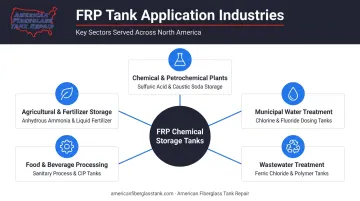
Primary applications include:
- Chemical and petrochemical plants — storing acids, caustics, and process chemicals
- Municipal and industrial water treatment — sodium hypochlorite, hydrofluosilicic acid, alum, ferric chloride, and aluminum sulfate
- Wastewater treatment facilities — caustic and oxidizer storage for pH adjustment and disinfection
- Food and beverage processing — where non-reactive materials are a baseline requirement
- Agricultural and fertilizer storage — ammonium compounds and nutrient solutions
Regulatory Alignment
Regulated industries favor FRP tanks for reasons beyond material performance. Water treatment chemicals like sodium hypochlorite and ferric chloride are both corrosive and federally reportable — meaning containment failure carries regulatory consequences, not just operational ones. FRP's leak resistance, secondary containment compatibility, and long-term structural integrity directly address those compliance requirements.
Key standards governing FRP tank design, fabrication, and use in these sectors include:
- AWWA D120-19 — thermosetting FRP tanks for water-related service
- ASTM D3299-18 — filament-wound glass-fiber-reinforced tanks
- ASTM D4097-19 — contact-molded corrosion-resistant tanks for aboveground vertical installation
- ASME RTP-1 — fabricator certification for reinforced thermoset plastic corrosion-resistant equipment
- NSF/ANSI 61 — drinking water system component health effects requirements
Form Factor Flexibility
FRP fabrication accommodates a range of configurations: vertical above-ground tanks, horizontal tanks for transport or space-constrained installations, underground storage vessels, and custom process vessels. That range of configurations means FRP fits most facility layouts without requiring structural compromise or custom workarounds.
What Happens When FRP Tank Maintenance Is Neglected
FRP tanks degrade from the inside out — and that's precisely what makes neglected maintenance so costly to reverse.
The interior corrosion liner is the first line of chemical defense. When it becomes compromised — through impact damage, UV degradation, chemical attack, or aging — stored chemical begins to wick into the structural laminate.
Once structural fibers are exposed to chemicals they weren't designed to resist, delamination follows, wall strength drops, and the tank moves toward failure.
The critical problem: this progression often happens without obvious external warning signs.
What AFTR's Inspection Teams Find in the Field
American Fiberglass Tank Repair's field inspectors — certified by the Fiberglass Tank & Pipe Institute and operating since 2003 — routinely identify the following failure patterns during assessments:
- Spidering and disbondment in the corrosion coat
- Emulsification and low Barcol hardness readings indicating resin degradation
- Floor stress cracking and shell distortion
- Capillary migration of liquid product beneath the corrosion coat — the most difficult to detect, since it leaves no surface evidence
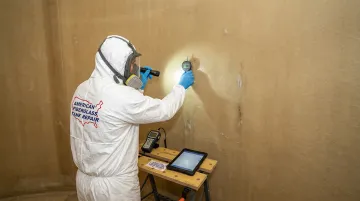
A hydrostatic test alone won't catch these conditions. A tank can pass today and fail three months later if capillary migration is already underway beneath an intact-looking surface.
The Cost Difference Between Early and Late
Catching a lining problem early means a planned relining job. Missing it means emergency response, potential environmental release, regulatory reporting obligations, and full tank replacement — a far more expensive outcome.
That's the operating principle behind AFTR's inspection program: early detection turns a potential tank replacement into a targeted repair, adding years of service life at a fraction of replacement CapEx. Field teams use ultrasonic, laser, and high-intensity backlight testing to assess not just surface conditions, but what's occurring inside the structural body of the tank.
How to Get the Most Out of Your FRP Chemical Storage Tank
FRP tanks deliver their full value — long service life, low maintenance costs, regulatory reliability — only when the right practices are in place from the start.
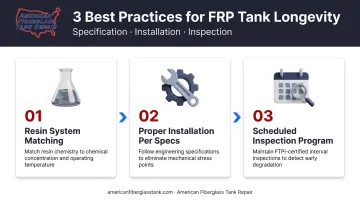
Three practices that determine long-term performance:
Match the resin system to the stored chemical — concentration, temperature, and exposure duration all factor in. Sodium hypochlorite, for instance, is one of the most aggressive chemicals handled in FRP vessels; resin selection, cure method, surfacing veil, and laminate system must all align from the outset. AFTR works with custom-blended isophthalic and terephthalic polyester, vinylester, and epoxy resins across 45+ laminate options to engineer product-specific corrosion layer systems.
Install per manufacturer specifications — stress points introduced during installation can compromise the liner before the tank even enters service. This is a common source of premature failure that shows up during subsequent inspections.
Maintain a scheduled inspection program — reactive-only maintenance consistently produces worse outcomes than structured interval inspection. AFTR offers both one-time assessments and ongoing programs supervised by FTPI-certified inspectors, with condition reports and specific remediation recommendations.
Documentation Is Not Optional
Every inspection, repair, and chemical change should be logged against the tank's service history. This record supports better maintenance scheduling, informs replacement decisions before emergencies force the issue, and supports regulatory compliance during audits.
Treat an FRP tank as an ongoing managed asset. Facilities that do typically extend service life by years — often avoiding five- to six-figure replacement costs in the process.
Conclusion
FRP chemical storage tanks deliver real operational advantages: corrosion resistance, structural efficiency, long-term cost savings, and lower maintenance overhead across chemical processing, water treatment, wastewater, and industrial sectors.
They are not, however, automatic. The benefits compound over time when the right resin system is specified upfront and when tank condition is actively managed through regular inspection and lining maintenance.
For facilities already operating FRP tanks, the most impactful next step isn't replacement — it's protection. Ensuring the internal corrosion lining is in serviceable condition, and having a structured inspection program in place to keep it that way, is what separates tanks that reach 30 years of service from ones that fail unexpectedly at 12.
American Fiberglass Tank Repair has worked with chemical plants, water treatment facilities, and industrial operators across all 50 states since 2003 — providing the inspections, relining, and field repairs that keep FRP tanks in safe, compliant service. If your tanks are due for evaluation, contact AFTR at 877-427-0090 to schedule an assessment.
Frequently Asked Questions
What is FRP in tanks?
FRP stands for Fiberglass-Reinforced Plastic, a composite material made from glass fibers embedded in a polymer resin. In tank construction, this combination creates a vessel that is structurally strong, chemically resistant, and significantly lighter than metal or concrete alternatives.
Is FRP chemical resistant?
Yes, FRP is highly chemical resistant — but the level of resistance depends on the specific resin system used. Vinylester offers broader resistance than standard polyester, and the interior corrosion liner must be selected and maintained to match the chemical being stored.
What chemicals can be stored in FRP tanks?
FRP tanks handle a wide range of industrial chemicals: acids (sulfuric, hydrochloric, hydrofluosilicic), caustics (sodium hydroxide, potassium hydroxide), sodium hypochlorite, ferric chloride, alum, solvents, and water treatment chemicals. The chemical type and concentration must be matched to the correct resin system.
How long do FRP chemical storage tanks last?
With proper resin specification and a consistent inspection and maintenance program, FRP chemical storage tanks can remain in service for 30 years or more. Service life is most directly determined by the condition of the interior corrosion liner and how promptly degradation is identified and repaired.
What is the difference between FRP tanks and steel tanks for chemical storage?
FRP tanks don't corrode, require no exterior painting or cathodic protection, and weigh far less than steel, making them lower-maintenance and typically more cost-effective over their service life. Steel tanks can handle higher pressures but need interior linings and regular recoating to resist the same chemicals FRP resists inherently.