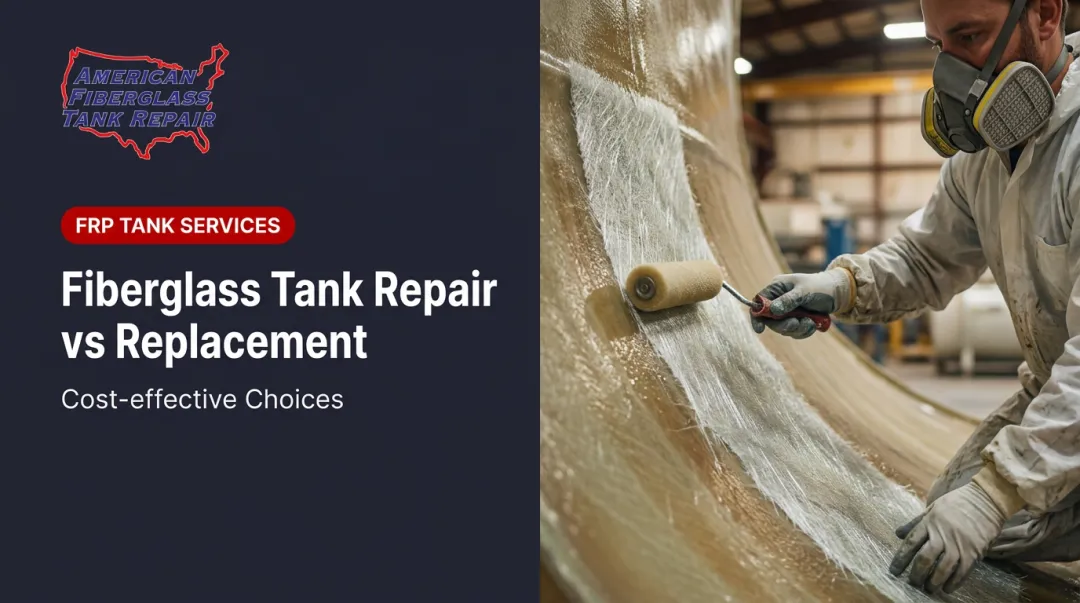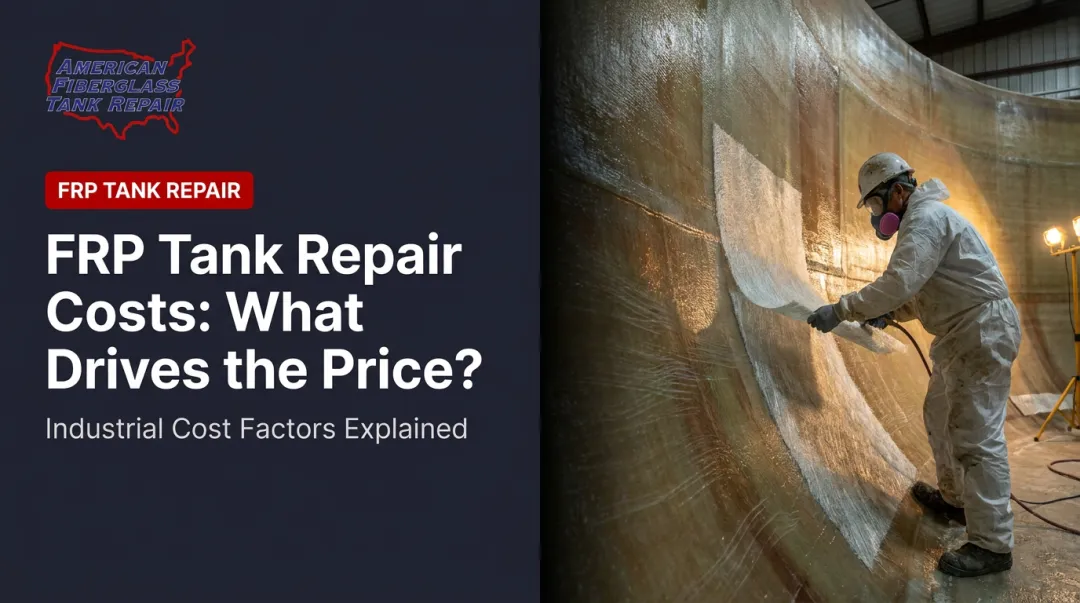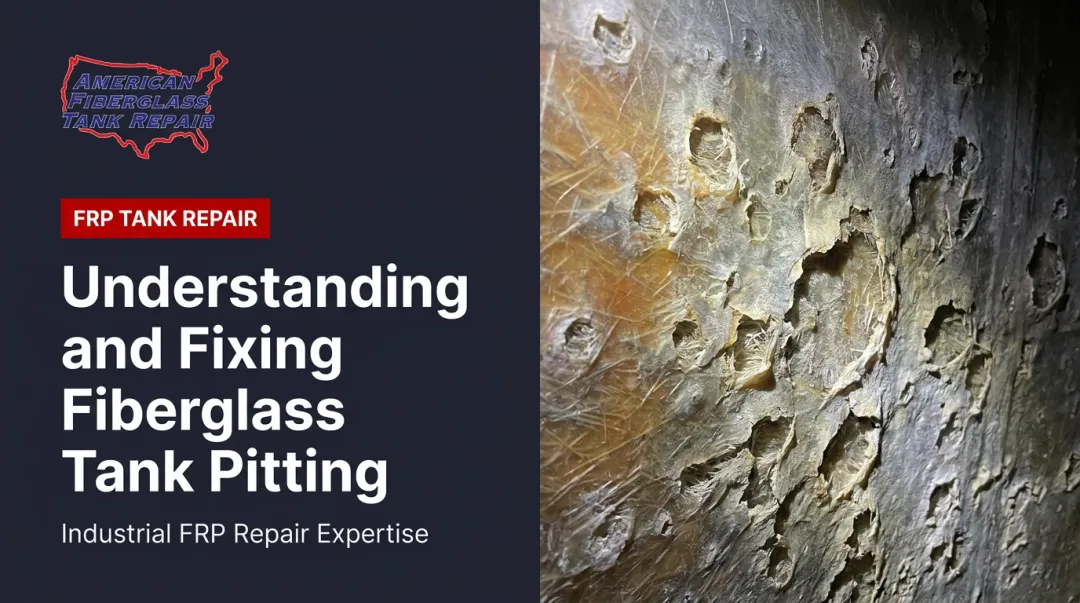
The honest answer: fiberglass tank repair costs vary enormously. Minor lining touch-ups on a small tank are a fundamentally different financial conversation than a full structural overhaul on a 50,000-gallon chemical storage vessel. Misunderstanding that range leads to underbudgeting, deferred maintenance that compounds damage, or accepting repair quotes that don't reflect actual inspection findings.
This article breaks down cost tiers for industrial FRP tank repair, the factors that drive pricing, a full cost breakdown, and how to evaluate whether repair or replacement makes more financial sense for your facility.
Key Takeaways
- Repair costs range from a few hundred dollars for minor lining work to $50,000+ for full structural overhauls on large tanks. No single number applies across the board.
- The biggest cost drivers are damage severity, tank capacity, chemical service, resin specification, and mobilization logistics
- Deferred maintenance is the most predictable cost multiplier: affordable lining repairs left unaddressed escalate into structural failures costing far more
- Professional inspection before any repair is non-negotiable; visual assessments alone routinely miss subsurface damage
- Large tank replacement carries 12–20+ week fabrication lead times; repair is typically faster and cheaper
How Much Does Industrial Fiberglass Tank Repair Cost?
There is no published rate card for FRP tank repair. Costs depend on the size of the tank, the nature and extent of damage, the resin system required, site conditions, and mobilization logistics. A professional inspection is the only reliable basis for an accurate estimate.
Repair costs fall into three recognizable tiers based on scope.
Minor Surface and Lining Repairs
This tier covers isolated interior corrosion barrier degradation, surface crazing, small blisters, or localized gelcoat and lining damage — confined to a limited surface area with no structural compromise.
Typical cost range: a few hundred to a few thousand dollars, depending on tank size, resin specification, and site access.
What this tier typically includes:
- Surface preparation and substrate cleaning
- Spot resin application and laminate work
- Post-repair cure inspection
What it excludes:
- Structural reinforcement or laminate rebuilding
- Full interior relining
- Extensive mobilization or confined space procedures
What appears to be minor surface damage frequently reveals deeper laminate compromise during proper inspection — this tier only applies when inspection confirms the damage is genuinely limited in scope. If the assessment turns up anything beyond the surface, the work typically escalates into the next tier.
Moderate Structural Repairs and Section Relining
This tier involves sections of damaged laminate, localized structural failure, stress cracking, or a partial interior reline. It's common in tanks that have experienced chemical attack, delamination, or years of deferred maintenance.
Typical cost range: low thousands to mid-five figures, scaled to tank size, resin system, and extent of laminate work required.
What this tier typically includes:
- Engineer-supervised inspection to define actual repair scope
- Laminate layup and appropriate resin system
- Component repair (nozzles, flanges, manway) where applicable
- Quality control testing including Barcol hardness and cure verification
This tier often follows a formal inspection that reveals damage beyond what was visible at the surface — which is why inspection comes before any repair estimate.
Major Overhauls and Full Tank Relining
Full interior relining, extensive structural rebuilding, or repairs requiring extended out-of-service time fall here. This is typical for large-capacity tanks in chemical or wastewater service with widespread corrosion barrier failure.
Typical cost range: tens of thousands of dollars, scaling upward for large tanks with aggressive chemical service requirements.
At this cost level, a repair-versus-replacement analysis is essential. A full reline can restore a tank to serviceable condition at a fraction of new-tank capital expenditure — but that outcome depends on whether the structural body is sound enough to serve as a substrate for new laminate work.
What this tier typically includes:
- Full interior surface preparation and blast cleaning
- Complete corrosion barrier and structural laminate rebuild
- Resin system selection matched to chemical service requirements
- Nozzle and fitting replacement or reinforcement as needed
- Engineer-supervised quality control, including thickness verification and cure testing
Key Factors That Affect the Cost of Fiberglass Tank Repair
FRP repair pricing is shaped by technical, operational, and logistical variables beyond the visible size of the damaged area. Understanding these factors helps facility managers budget accurately and avoid mid-project surprises.
Type and Severity of Damage
FRP damage exists on a spectrum, and repair complexity escalates at each step:
| Damage Type | Repair Implication |
|---|---|
| Surface/liner degradation (crazing, blistering, topcoat veil deterioration) | Spot repair if structural laminate is intact |
| Corrosion barrier failure | Interior relining with surface prep, resin application, cure testing |
| Delamination, stress cracking, fiber pullout | Engineering assessment; structural laminate repair required |
| Through-wall damage or severe nozzle/manway failure | Major repair or repair-vs.-replacement decision point |
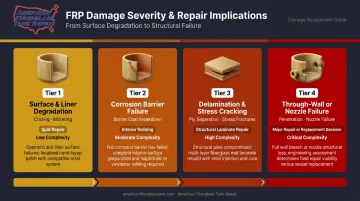
The complication: damage that appears minor on the surface can reveal deeper laminate compromise during inspection. AFTR's field teams use ultrasonic, laser, and high-intensity backlight testing specifically to detect what's happening inside the structural body, including capillary migration of liquid product beneath the corrosion coat, not just what surfaces show.
Deferred maintenance is a major cost multiplier. Early-stage lining degradation that's affordable to address can progress to structural failure requiring full relining or replacement if ignored. The difference often comes down to a few hundred dollars in early maintenance versus tens of thousands for structural repair or full replacement.
Tank Size and Chemical Service Requirements
Tank capacity directly affects cost. More surface area means more materials, more labor hours, and longer out-of-service time. A repair on a 500-gallon tank is a fundamentally different scope than the equivalent repair on a 50,000-gallon tank.
Chemical service requirements are equally significant. The stored product dictates the resin system and laminate construction required:
- Standard service (water, mild chemicals): isophthalic or terephthalic polyester resins, cost-effective when premium chemical resistance isn't required
- Intermediate service (dilute acids, moderate oxidizers): vinylester resins offer a performance step up at moderate cost increase
- Aggressive chemical service (sodium hypochlorite, hydrochloric acid, sodium hydroxide, ferric chloride): epoxy vinylester or novolac vinylester systems matched to specific concentration and operating temperature
Interplastic's CoREZYN guidance positions isophthalic corrosion-resistant resins as cost-effective alternatives to vinylesters when high-performance properties aren't required. For aggressive chemistries, Ashland's Derakane resin selection guide identifies epoxy vinylester and novolac vinylester families for acids, alkalis, bleach service, and high-temperature oxidizing environments. These systems carry higher material costs than standard polyester alternatives.
Resin and Laminate Specifications
Not all FRP repairs use the same materials. The appropriate resin system and laminate construction must be matched to the tank's original specifications and service environment. Using the wrong system doesn't save money; it results in premature failure and higher long-term costs.
AFTR selects from a broad material library to match each tank's exact service conditions:
- Custom-blended isophthalic and terephthalic polyester, vinylester, and epoxy resins
- Over 45 laminate options: fiberglass mat, chopped strand, Nexus, Harlar, and carbon veil
- Resin and laminate pairings follow the same protocols used in original tank fabrication
Access, Mobilization, and Downtime Costs
These are among the most underestimated cost components:
- Confined space entry: OSHA 29 CFR 1910.146 requires permit-space programs, atmospheric testing, ventilation, designated roles (authorized entrant, attendant, entry supervisor), PPE, and rescue planning for qualifying tanks and vessels. This adds required labor and equipment that isn't present in open-access maintenance work
- Site access: Tanks in hard-to-reach locations, requiring scaffolding or specialized equipment, cost more to repair than equivalent damage in accessible installations
- Mobilization: Travel, equipment shipping, and technician deployment vary significantly by geography and urgency. Emergency mobilizations cost more than scheduled maintenance windows
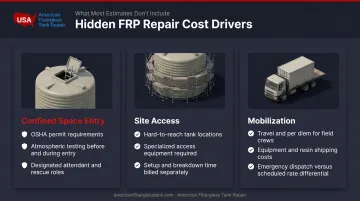
AFTR's regionally distributed field teams and pre-stocked Service-Pack shipping containers — carrying blended resins, mat, and veil laminates — reduce mobilization lead time across North America. For facility managers planning maintenance windows, that faster deployment directly reduces downtime costs.
Full Cost Breakdown: One-Time and Recurring Expenses
The total cost of FRP tank repair extends beyond the repair itself. Accurate budgeting requires accounting for all components:
Inspection and Assessment (One-Time per Repair Event)
Professional inspection — using ultrasonic, laser, or high-intensity backlight testing — is required to define repair scope accurately. Without it, repair estimates are guesswork.
AFTR's inspections are supervised by Fiberglass Tank & Pipe Institute certified inspectors and examine the interior corrosion coat, structural body, exterior shell, and all nozzle interfaces. Costs vary based on tank size, number of tanks, and testing methods required.
Materials (One-Time)
Material costs scale with repair area, required laminate thickness, and resin specification. Key material categories include:
- Resin systems (isophthalic/terephthalic polyester, vinylester, or epoxy depending on service)
- Fiberglass mat and veil laminates
- Topcoat and surface finishes
Premium resin systems for chemically aggressive service cost more than standard polyester — and using the wrong system to save money on materials leads to premature failure.
Labor and Mobilization (One-Time)
Certified FRP repair technicians carry higher rates than general labor. Factor in mobilization costs, confined space entry requirements, and crew size. Larger jobs with tight turnaround requirements need larger crews. AFTR staffs projects around customer schedules — including shutdowns, night shifts, and weekends.
Downtime and Operational Impact (Situational)
For production-critical tanks, the cost of taking the vessel out of service — lost throughput, temporary storage, process disruption — can exceed the direct repair cost. Scheduling repairs during planned shutdowns or off-peak periods significantly reduces this impact.
Ongoing Maintenance and Re-inspection (Recurring)
One-time repairs are only part of the picture. After major repairs, periodic inspections are required to monitor lining integrity. TTI Environmental notes that comprehensive FRP tank inspections are typically required every five years, with sodium hypochlorite and certain sulfuric acid service requiring two-year inspection intervals.
A proactive inspection program costs a fraction of emergency repair work — and protects the full capital investment in your FRP infrastructure.
Repair vs. Replacement: What Makes Financial Sense?
Once you have a repair cost estimate in hand, the next question is whether repair actually makes financial sense against replacement. For large industrial tanks, replacement involves far more than a new vessel. Engineering, fabrication lead times (typically 12–20+ weeks for large FRP tanks), installation, and potential site modifications all add up. Repair — even full relining — frequently represents significant savings and gets the asset back in service faster.
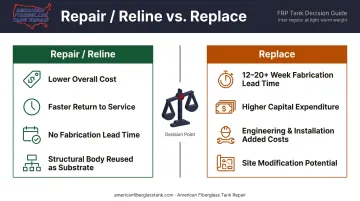
Repair is clearly the better choice when:
- Damage is localized and the structural body is sound
- The chemical service hasn't changed
- A full reline or structural repair restores the vessel to required service life
- Cumulative repair costs are well below replacement cost
AFTR's approach recognizes that even when a tank has breached its corrosion barrier, the structural laminate is often still sound. That intact structure becomes the base material for a new corrosion layer, restoring full service capability and extending the vessel's life by years. Field Service Engineers assess the asset on-site and propose a repair-versus-replace plan based on actual inspection findings.
Replacement may be the better choice when:
- The tank has exceeded its design service life
- Damage spans multiple zones with no intact structural core remaining
- Current chemical service requirements can't be met through relining alone
- Total repair costs are within striking distance of a new vessel's installed price
Neither path should be chosen based on a visual walkdown. A formal inspection with ultrasonic thickness testing and laminate condition analysis gives you the data to make this call with confidence — and to defend it to your stakeholders.
What Most Facility Managers Get Wrong When Budgeting for Fiberglass Repair
Most budgeting mistakes come down to the same root problem: underpricing the true cost of getting it wrong. Three errors show up repeatedly.
Relying on visual inspection and the lowest quote. Surface damage rarely reflects the full extent of laminate compromise beneath. Choosing the lowest bid without verifying a proper inspection was performed frequently results in incomplete repairs that fail prematurely. AFTR's testing methods detect subsurface conditions — including capillary migration of liquid product under the corrosion coat — that visual inspection misses entirely.
Deferring maintenance to avoid near-term spend. Localized lining failure escalates quickly. Early-stage degradation that costs a few thousand dollars to address can progress to full structural failure requiring complete relining or replacement — often at 10x the original repair cost. Proactive inspection programs exist specifically to close that gap.
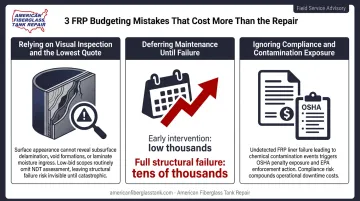
Ignoring compliance and operational exposure. In regulated industries — water treatment, chemical processing, food manufacturing — a failing tank doesn't just need repair. It can trigger:
- Contamination events or product loss
- Regulatory action and facility shutdowns
- OSHA penalties of $16,550 per serious violation and up to $165,514 per willful or repeated violation
These costs never appear in the lowest quote. That's exactly why the lowest quote is rarely the cheapest option.
Frequently Asked Questions
Frequently Asked Questions
How much is a small fiberglass repair?
For industrial FRP tanks, minor repairs — localized lining degradation, surface cracks, small blisters — typically range from a few hundred to a few thousand dollars depending on tank size, resin specification, and site access. A professional inspection is required first, since surface damage frequently conceals deeper laminate compromise.
Can a cracked fiberglass tank be repaired?
Yes. Surface cracks through the lining layer can be addressed through lining restoration; structural cracks require laminate repair and reinforcement. The appropriate repair method and cost depend on whether the crack is cosmetic, stress-related, or structural — a determination that requires professional assessment.
How do you know when fiberglass tank repair is worth it vs. replacement?
Repair makes sense when damage is localized, the structural body is sound, and the work restores required service life. Replacement is more viable when damage is widespread, the tank is near end of life, or cumulative repair costs approach new-tank cost — a call that requires an engineer-driven inspection, not a visual estimate.
How long does industrial fiberglass tank repair take?
Minor lining repairs typically complete in one to several days; full relinings or major structural repairs on large tanks can take several weeks depending on scope and resin cure requirements. AFTR schedules around planned shutdowns, night shifts, and weekends to minimize operational disruption.
What does a fiberglass tank inspection cost?
Inspection pricing varies by tank size, number of vessels, testing methods (ultrasonic, laser, high-intensity backlight), and site conditions — contact AFTR for a site-specific quote. It's a necessary step before any repair: inspection defines scope accurately and catches subsurface damage that visual assessment misses.
Does deferred maintenance significantly increase fiberglass repair costs?
Yes, and it's one of the most significant cost multipliers in FRP tank management. Early-stage lining damage that costs little to address can escalate to structural failure requiring full relining or replacement if left unchecked. Proactive inspection is consistently the most cost-effective approach to managing FRP assets long-term.